
Why Cold Outbound Response Rates Are So Low (And What Actually Moves Them)
The average cold outbound reply rate is 1–3%. Two-thirds of buyers say outreach is getting worse. Here is why the number has not moved in a decade, and the three levers that actually change it.
The number that never moves
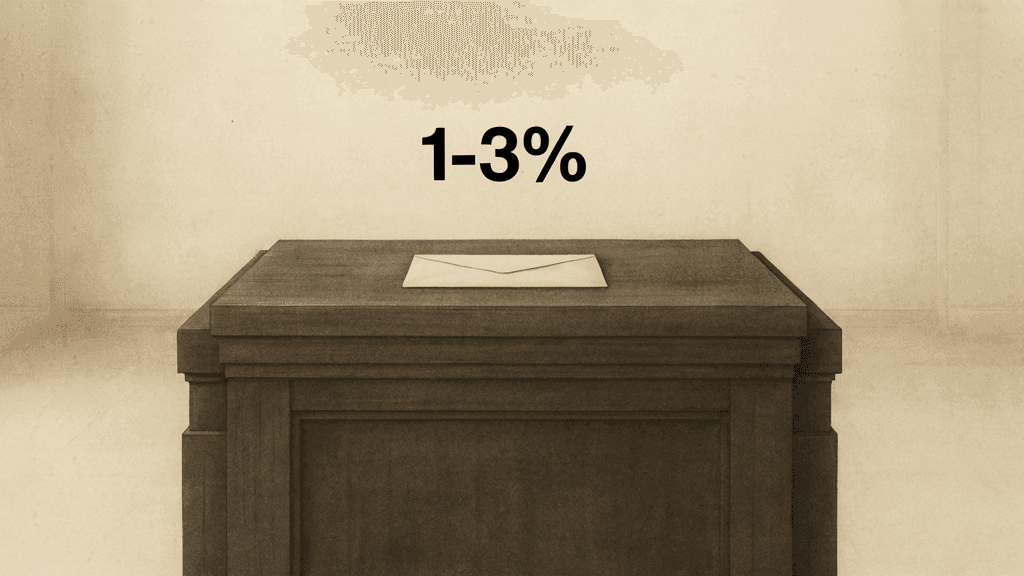
Cold outbound reply rates sit at 1 to 3%. Not this year. Not last quarter. Across industries, across tools, across decades. The number has barely budged since email became a sales channel.
Meanwhile, the technology around it exploded. Sequences got smarter. Enrichment got cheaper. AI started writing the templates. And yet: 1 to 3%.
Two-thirds of B2B buyers report receiving more irrelevant outreach than they did two years ago, not less. Teams respond by sending more. The tools respond by making it easier to send more. The number stays flat.
Something deeper is broken. It is not the tool. It is the model.
Why templates are the ceiling
Every outbound stack today is built on the same assumption: sales is a funnel, and funnels scale with volume. You buy a list, write a sequence, load it into a sequencer, and push send.
The problem is not execution. It is that the assumption is wrong.
Buyers do not ignore outreach because the subject line is weak. They ignore it because it was not written for them. A template, however well personalized, is still a template. It starts from what the seller wants to say, not from what the buyer just did.
Take two messages that land in the same inbox:
"Hi, I noticed your company is growing. We help teams like yours scale outreach. Happy to share a case study."
"Hi, I saw you posted three AE roles this month. Teams usually staff up like that when pipeline is outpacing the bench. We help keep sourcing running between hires so the new reps start with warm accounts instead of a cold list."
One is a template with a merge field. The other cites a specific event, connects it to a specific pain, and offers a specific fix. The second message does not say "we help teams like yours." It says "I saw this, here is what it means, here is how we help."
That is not better copywriting. It is a different operating model.
The three levers that move response rates
Lever one: Stop sending to lists. Start sending to signals.
A static list is a snapshot. It decays the moment it is exported. The companies on it change every day: new hires, new funding, new pain. A list cannot keep up.
Signals are different. A funding round, a hiring spike, a leadership change — these are public, time-stamped events that create a reason to reach out right now. The message changes from "We exist and would like to talk" to "Something just happened and here is why it matters for you."
Signal-based outreach does not guarantee a reply. But it changes the reply from "Not interested" to something more like "Tell me more" — because the sender demonstrated they were paying attention.
Lever two: Write per person, not per template.
Most personalization today is cosmetic: first name, company name, industry reference. The recipient can tell. They have seen it a thousand times.
Real personalization means the message would not work for anyone else. It cites a specific detail. It connects that detail to a specific point. It sounds like a human who did their homework, not a machine filling in blanks.
This does not scale with templates. It scales with a system that reads the signal, understands the context, and writes the message from scratch — every time, for every person.
Lever three: Learn from outcomes, not activity.
Most teams measure sends, opens, and clicks. These are activity metrics. They tell you what happened, not what worked.
The metric that matters is outcomes: which messages got replies, which signal types converted, which segments produced meetings. Feed those back into the model. Rank tomorrow by what succeeded yesterday.
This is how the number moves. Not by tweaking subject lines. By building a system that gets smarter every week about who to target, when to reach out, and what to say.
What the ceiling looks like when you remove the constraints
We run a public experiment called Sell Anything. We took a product we did not build, in a market we do not know, with zero brand behind us. No website. No referrals. No warm leads. Just SimpL, configured the same way any customer would.
Response rates on our test accounts are approaching 90%.
That is not a benchmark. It is a data point from controlled conditions with a small sample. But it tells us something important: the ceiling is not 3%. The ceiling is much higher when you remove templates and let the system write from signals.
Most teams will not hit 90%. Brand constraints, ICP guardrails, and compliance matter. But the gap between 2% and what is possible is not about better copy. It is about a different model entirely.
Bottom line
Cold outbound response rates have been stuck at 1 to 3% because the industry optimized for volume instead of relevance. Templates, sequences, and list-based prospecting are not the solution. They are the ceiling.
The teams that break through are not sending more. They are finding the right person at the right moment, writing a message that cites what changed, and learning from every outcome.
SimpL replaces the template stack with a signal-first model: it finds the buyers, writes the outreach, and learns from every deal. No sequences, no templates, no list building.
SimpL helps sales teams find the moment, shape the action, and avoid noisy outbound.Visit the main site